Showing posts with label parts of speech. Show all posts

Friday, February 12, 2016

8 Practices, Tools, and Routines that Foster Independence During Writing Workshop


"Teacher?  How do you spell _______?"

We've all heard this question countless times, especially in the beginning of the year.  So, the challenge for teachers becomes: How do we help students develop confidence in themselves as writers, so that they rely less on us?

The answer?

Tools and routines!

Give students the tools and routines they need, and they will assume the responsibility for their writing!

Mrs Rios Teaches: 8 Practices, Tools, and Routines that Foster Independence During Writing Workshop

Here are some tools and strategies that I share with my young writers:

1) First of all, clearly communicate that you value content and voice, over spelling words correctly.  If students feel like spelling the words correctly is the most important aspect of writing, they will become bogged down in the tediousness of making sure every. single. word. is. spelled. just. right.  That leaves very little brainpower for creativity and craftsmanship. (P.S. - I'm not saying that it is not OK to hold students accountable for some agreed upon high frequency, or word wall/sight words. Just keep it reasonable.)

2) Motivation! The two biggest motivators for young writers are a) choice and b) an authentic audience and purpose. I know what you're thinking. "But, I've got district tests to administer! I can't just let my students write about Minecraft all year!" Here's the thing. Writers are passionate, curious, and maybe just a bit obsessed, by nature. If you embrace the idea of allowing your students to choose their topics, you will be amazed at how engaged they will be, during writing workshop. So, yes! You actually you can have a student write about Minecraft all year long. In fact, I have one this year. He has written a story about "Creepers", an elaborate "how-to" guide to Minecraft, and has shared several opinions and book recommendations, all about Minecraft. He has also written about tigers, bats, his family, and created a whole new chapter book titled "The Crazy Stick Family." What I am saying is, try to be flexible.

The other big factor here is audience and purpose. Ask yourself, "Who reads my students' writing?" If the answer is "only you," that is part of the problem.  Students need opportunities to share their writing on a daily basis with an audience, and preferably, an audience that extends outside of the four walls of your classroom. So, have students read their pieces to their book buddies, send students up to the principal to share their writing, have a Family Writing Night. Get creative, so that students feel that their writing has true purpose.

3) One of the first mini-lessons I do in the beginning of the year is modeling stretching out sounds.  The whole point of writing is to communicate.  So, teaching students to do their best to sound out words and write as many sounds as they can, is an invaluable lesson for young writers.  (P.S. This lesson directly connects to the Stretchy Snake reading strategy.  Make that connection between reading and writing whenever possible for students!)

Mrs Rios Teaches: 8 Practices, Tools, and Routines that Foster Independence During Writing Workshop

4) Sound-Spelling Cards:  Ok, I am thinking back to a time that brings back hard feelings.  Our district participated in the Reading First Initiative.  We underwent countless hours of mandatory trainings, and were expected to maintain 100% fidelity to our basal. Blech! Dark days, friends.  Dark days.

One good thing (there were a few) that came with that, were our Sound-Spelling Cards, which I still use to this day.  These are an excellent visual in the classroom to communicate to students the idea of being FLEXIBLE when it comes to spelling words. This tool requires multiple mini-lessons throughout the year, in order for kids to use them regularly, and effectively.  I have the large versions posted along the top edge of our front wall.

Mrs Rios Teaches: 8 Practices, Tools, and Routines that Foster Independence During Writing Workshop

I also love the little desk versions, as well.  (I give one to each of my emergent writers, and keep a set of 6 at my teaching table for conferencing.)

Mrs Rios Teaches: 8 Practices, Tools, and Routines that Foster Independence During Writing Workshop

There are some free ones (not the same ones I have though) on TPT, if you search "Sound Spelling Cards".

5) Using Resources: Each of my students has a writing folder.  Inside, each students will find:

Mrs Rios Teaches: 8 Practices, Tools, and Routines that Foster Independence During Writing Workshop

**Writer's Dictionary:  Once again, this is the kind of tool that requires multiple mini-lessons throughout the year.  Model using it often for your students in your own writing. TIP: If my students can't find a word in their dictionary, they think of the first sound/letter in that word, open to that page, and raise their dictionary in the air. As I wander through the room and conference, I will write a word (if it is not decodable), as needed. Students do not come to me, or follow me around, because that would make me crazy.

Mrs Rios Teaches: 8 Practices, Tools, and Routines that Foster Independence During Writing Workshop

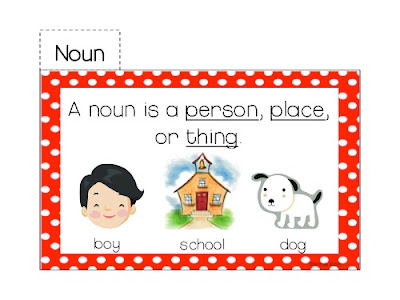
**Parts of Speech Flipbook: I made this interactive flip book so that my students would have something to refer back to all year long when we talked about good writing. We use it as a place to collect words we love! Teaching students to read like writers is a very powerful practice. When students are reading and come across a word that they find particularly interesting, they jot it into their flip books. The fact that students have to categorize their favorite words by parts of speech, is a great way to reinforce grammar skills.

I have this available as a FREEBIE in my store (The freebie includes nouns, verbs, pronouns, and adjectives), or for purchase in the larger sized version you see above. It is faster to assemble and includes nouns, verbs, linking verbs, pronouns, adjectives, adverbs, and more. Click on the image below to learn more about either version.

Mrs Rios Teaches: 8 Practices, Tools, and Routines that Foster Independence During Writing Workshop

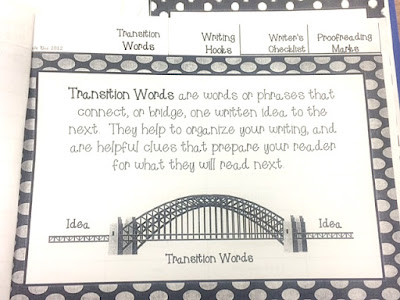
**Writing Tools Flipbook: I created this flip book as a reference tool to help my students with specific areas of writing. This book was created with 2nd grade in mind, but teachers of 1st-3rd have found it useful, too. 
Mrs Rios Teaches: 8 Practices, Tools, and Routines that Foster Independence During Writing Workshop

Inside, my students can reference...

*quick refreshers of previous mini-lessons

Mrs Rios Teaches: 8 Practices, Tools, and Routines that Foster Independence During Writing Workshop

*lists of transition words


Mrs Rios Teaches: 8 Practices, Tools, and Routines that Foster Independence During Writing Workshop

*ideas for writing hooks


Mrs Rios Teaches: 8 Practices, Tools, and Routines that Foster Independence During Writing Workshop

**writer's checklists for narrative, opinion, and informative writing

** and a proofreading marks page

6) Writing Partnerships and Classroom Experts: Writing partnerships are a wonderful way to share expertise in the classroom. The more your students see each other as helpful resources, the less apt they will be to only turn to you.  Writing partners ask each other for help, share their writing, and give feedback and encouragement to each other. Pair students together that compliment each other. Think about each student's strengths and weaknesses, and use that to make your partnerships. A student who is a poor speller might pair well with a child who rocks at it. A young writer who struggles with ideas might benefit by working with a student who sees story seeds everywhere! From my learning, partnerships work best when they are stable, so try to maintain the same partnership for each unit, or at least a few months.

I love this idea of "Classroom Experts" from Writing Workshop: The Essential Guide, by Ralph Fletcher. (affiliate link below)

Mrs Rios Teaches: 8 Practices, Tools, and Routines that Foster Independence During Writing Workshop

It is a new one for me, but perfectly matches my philosophy, as described above. Make your students the experts! In his book, he suggests making anchor charts that list different areas of writing, for example: spelling, complete sentences, word choice, story ideas, writing hooks, paragraphs, dialogue,  editing, or revising, and then writing students' names underneath those categories, if they have proven to be especially good in one of the aforementioned areas. Students who are struggling with one of these areas, can refer to the chart, and then seek out a conference with the expert. He even suggests that students make appointments with the expert. I just love it! Genius!

7) Checklists and Anchor Papers:  I am a big believer that students will rise up to whatever level of expectations we set. So, whenever we start a new type of writing, I like to provide an exemplar for my students to study. Once again, this goes back to having students read like writers. They look at these anchor papers to notice the elements of that type of writing, the structure, and other evidence of author's use of craft (word choice, sentence length, etc...)

We use our classroom observations to construct the beginning of a checklist. I add anything else from my district's rubrics, that I know the students will need to be successful. I usually add it after a mini-lesson, so that my students don't become too overwhelmed. Here is a shot of our Informative Writing checklist. We added "text features" to this chart later on.

Mrs Rios Teaches: 8 Practices, Tools, and Routines that Foster Independence During Writing Workshop

So, where do I get these anchor papers, you ask? Well, I have some from Lucy Calkins' Unit of Study kit, but I also save any really good writing from previous years. You could also coordinate with others at your grade level. Just make a copy, and hold onto it.  While I prefer to use student writing, you can always model with your own writing, as well, as part of your mini-lessons. Kids need to see us write regularly!

8) Anchor Charts:  Leave tracks of all of your mini-lessons by making anchor charts, and leaving them up around the room, at least for the duration of your unit. Some charts will prove to be timeless, however. (Reality Check: I don't know about you. But, I may just be an "anchor chart-aholic." Real estate in which to hang an anchor chart is at a premium in my classroom. So, one tip I have, is to take pictures of any anchor charts that you intend to take down, and make a binder/poly folder with all of the pictures. It can be a very helpful reference tool, and comes in handy during conferences and small group work. I do the same with all my reading anchor charts, too. Makes it so easy when it is time to make the chart again, the following year.)

Looking for more writing ideas? Follow me on Pinterest!


Alright, that is it, my friends. I hope you found some interesting nuggets to use in your classroom. I would love to hear what successes you have had in your classroom with regards to developing independent writers. Share, by leaving a comment below.

Nicole

Monday, May 28, 2012

A Big Yipppeeeeee and a "I Love Foldables" Linky Party!

Whooppeeee!  I just found out that I won first place in Jessica Stanford's "Just Because Giveaway"!  I never win anything.  She donated $10 to my next project at Donor's Choose.  I am thrilled.  Thanks so much, Jessica!  If you haven't checked out Jessica's blog, Mrs. Stanford's Class, head on over.  She always has some great ideas and such a positive attitude!

Besides winning giveaways, one of my other favorite things is a good foldable.  Do you love foldables as much as I do?  They are little books of magic and wonder to my students.  I love watching them get excited as they begin to fold, layer, etc...until they have their very own little book. 

Well, we are not the only foldable lovers out there.  Laura Candler over at Corkboard Connections had a Fantastic Foldable Freebies Linky Party awhile back.  Notice the emphasis on Freebies!  Yeah! She has a great list of foldable resources just for you.

Here are a couple of my own Fantastic Foldable Freebies!

This year, I used this Parts of Speech flip book as an end of the year review.  But, next year I will use it as a mini-word wall for my students.  They will be able to add to their flip book all year long.

I put my Short A Flip Books in my emergency substitute bin.  They were already folded, stapled, and ready to go.  Since the book was filled with fun review activities for short A, it was the best report I have received from a substitute in a long time.  She mentioned that the students were "very on task",  and "focused."  Music to my ears!

Click on the button below to download more fantastic foldable freebies!


I also have one other foldable for purchase.  This is my Tpt store's "best seller"!


I hope you have a great Memorial Day, and have a chance to find some great foldable resources for your classroom!

Nicole


Saturday, May 19, 2012

100 Followers Celebration Freebie!

My kids were sitting down eating their special weekend breakfast, and I snuck over to the computer to check up on things.  And....Oh my goodness, I have 100 followers!  How did that happen?  Yippeee!

Wow, I am so grateful for each one of you.  Blogging has turned out to be another part-time job, but a rewarding one.  I have met so many wonderful people on-line, and have received countless gems of advice from kind, fellow bloggers. 
When I first saw that I was at 100 followers, to be honest, I panicked.  I didn't have a giveaway in mind.  But, looking through my desktop, I found something that you all might like to have...as a thank you gift from me.

My Parts of Speech Flip Book has been downloaded over 1800 times.  If you haven't downloaded it yet, click on the image below.


Anyway, I received such a nice reaction to the original flip book, that I decided to create a follow up book.  My Vocabulary Flip Book.  This mini-word wall booklet presents compound words, synonyms, antonyms, and homophones.  There is an instructional cover page, and mini-word wall to be filled in by students for each vocabulary skill.  I intended this book to be part of a vocabulary unit I am working on.  But, never you mind.  We are celebrating!  Put out the cloth napkins and good china! 

Just click any of the sample images below to download your copy. 


I hope you and your students enjoy this little book.

Once again, thank you so much for following my little blog.  Ok, now I am off to make some more pancakes!

Have a great weekend,

Nicole

Friday, April 20, 2012

A Friday Freebie for Followers

I hope everyone has had a great week and is looking forward to the weekend.  In honor of our much beloved Saturday and Sunday, I am posting my first freebie down below! 

But first, let's talk grammar instruction!


Should you teach it? When? And how much?


This is a highly debated topic. But, here are some thoughts:


Effective, authentic, and meaningful ideas for teaching young writers about grammar.

1) Teach grammar through writing: 

I am encouraged to hear that entire class periods of diagramming sentences is going by the wayside. Ugh! I can't think of a faster way to kill any sense of joy with regards to words, writing, and language. Honestly. I speak from experience, here.


In my opinion, parts of speech and grammar should be learned through....wait for it..... reading and writing! I know...mind-blowing.


First and foremost, I believe young writers should be encouraged to get their ideas, and voices, onto their paper. The mechanics of language will emerge as a natural concern because, as an author with something to say, he/she is going to want people to be able to understand what they've written. But, first your students must see writing as a true form of meaningful communication. 


2) Target your lessons:


Focus your direct instruction on problems that you see in your students' writing. These lessons can be done whole group, small group, or during your writing conferences. Giving feedback that is timely, relevant, and that the students can immediately apply in their own writing, is the very essence of powerful teaching!


For example, I know what Common Core wants me to teach my 2nd graders. But, I work with a large population of English Language Learners. Therefore, much of my "grammar instruction" is focused around explicitly teaching my students how the English language structure is often very different from their home language.


3) Read to your students

Exposing your students to the best of literature is imperative. Pick books that are just above their independent level. We want to keep nudging our students forward, but they must be able to understand the reading, in order to be able to analyze the writer's moves, and then subsequently, make some attempt to approximate what they've heard, in their own writing.

Here are some mentor text suggestions for showing students about the way words work. (affiliate links included)

Nouns and Verbs:


Effective, authentic, and meaningful ideas for teaching young writers about grammar.

Effective, authentic, and meaningful ideas for teaching young writers about grammar.

Adjectives:

Effective, authentic, and meaningful ideas for teaching young writers about grammar.

Effective, authentic, and meaningful ideas for teaching young writers about grammar.


Adverbs:

Mrs. Rios Teaches: Effective, authentic, and meaningful ideas and activities for teaching young writers about grammar / parts of speech.

Effective, authentic, and meaningful ideas for teaching young writers about grammar.


4) Give students lots of practice!

I'm not talking about written practice, here. I mean lots of oral practice. All students need significant amounts of practice using language to communicate with others. Get in the habit of having students plan and rehearse what they will write, before they actually pick up a pencil or pen. Lucy Calkins calls this "writing across your fingers." It is a highly effective practice that allows you to listen in, encourage, and correct, if necessary, before your students invest themselves on paper. 

If you hear a few of your students misplacing adjectives (as my Spanish speakers often do), pull a small group during your writing workshop time, and do a small group lesson. It has been said that the "easiest revisions happen before the writing even begins." I believe this is absolutely true. (What's more, they are the least painful for our budding little authors.)

I will leave you with one more saying, just in case you're not sold yet: "What students can say, they can write." Ok, moving on.

5) Encourage students to play with words

Encouraging your students to notice and collect words is a wonderful practice, as well. Have students keep lists of words that they notice and love. Encourage them to manipulate, substitute, and insert words until the meaning they are writing towards, is achieved.

My daughter came home last year with a little mini-word wall.  I saved it, thinking that one day I would do something like it with my own students.  A couple of hours later, and oila...a Parts of Speech Flip Book for the primary grades! It is my most downloaded resource of all time with over 305,000 downloads! (Best of all...it's a free download for you! Just click any of the images below to get your copy.)


Effective, authentic, and meaningful ideas for teaching young writers about grammar.

The free flip book covers nouns, verbs, adjectives, and pronouns. (Looking for adverbs, too? Keep reading.)  In the past, I used the cover page for each part of speech as a springboard for a mini-lesson, and then we ended by coming up with some example words together to put on the write-in pages.  Finally, I wrapped it up by having the students go on a "word hunt" in their reading books for more examples of that part of speech.  

But now, we use it more as a place to collect words that we love. Words that we aspire to use in our own writing.

Here are some sample pages:

Update: 1/30/16
Effective, authentic, and meaningful ideas for teaching young writers about grammar.
Looking for adverbs? I have an "adverbs" tab in the full-sized version of this flip book, along with linking verbs, and a whole lot more. The full-sized version is also super quick to put together, as it requires less cutting. Check it out by clicking below!

Effective, authentic, and meaningful ideas for teaching young writers about grammar.

Looking for more ideas for grammar instruction? Check out my Grammar Pinterest Board below.


Enjoy, and happy weekend.

Nicole

LinkWithin

Related Posts Plugin for WordPress, Blogger...